
Wichita Prayer Breakfast Since 1963:
More Than a Breakfast
Part 1 of 2 — A Legacy Worth Honoring
By Damon Young
One of the things I've tried to do in my first year as CEO of Lead Wichita is slow down and listen. Before building, I wanted to learn. Before casting vision, I wanted to understand what has already been built — and by whom. That has meant a lot of long conversations with people who carry the memory of this city.
A few months ago, I sat down with three of those people — Richard Coe, who attended his first Wichita Prayer Breakfast as a teenager in the early 1960s and provided leadership for it from 1981 for about 15 years; Jon Rolph, CEO of Thrive Restaurant Group; and Pastor Nick Martineau of Hope Community Church. I asked them to walk me through the history of the Wichita Prayer Breakfast. What followed was one of the most grounding conversations of my year. I'm deeply grateful to these three for their time and for the way they've poured into this gathering — and into me.
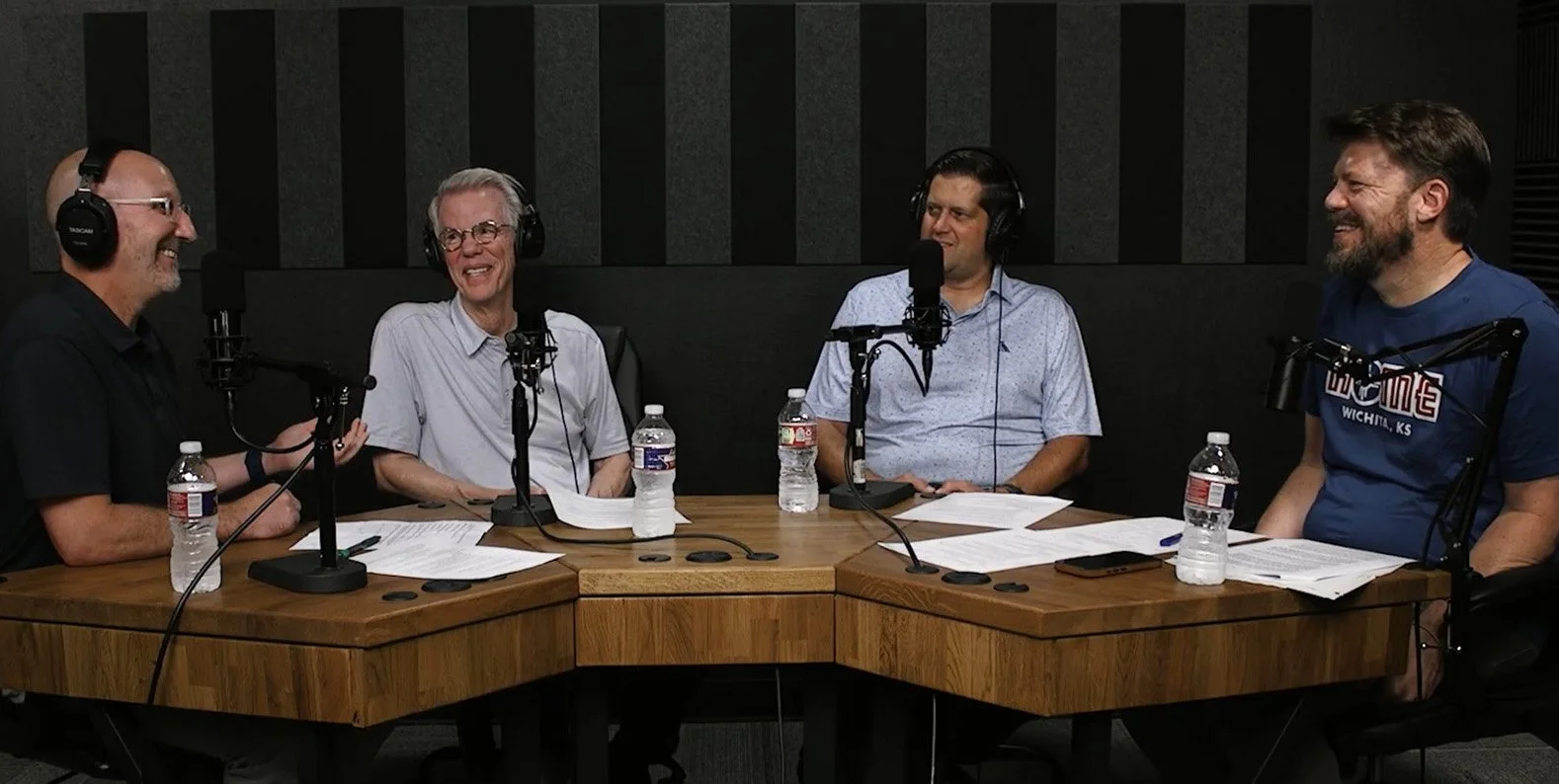
Richard Coe, Jon Rolph, and Nick Martineau, Damon Young
I'd encourage you to listen to the full conversation here: Wichita Prayer Breakfast History
Here's what I took away.
A Little History
The roots go back to 1952, when Kansas Senator Frank Carlson invited President-elect Eisenhower into a Senate prayer group — men setting aside partisan differences to pray and be real with one another. From that gathering grew the National Prayer Breakfast. About a decade later, in 1963, 30 to 40 men traveled to Wichita at their own expense to share what they had experienced through small groups centered on Jesus. They met with service clubs, and in hotels, restaurants, and homes across the city. At the end of that week relationships with brothers in Christ from around the country had been established. Additionally, relationships within Wichita had been strengthened.
The Wichita Prayer Breakfast is over 60 years old. It is one of the longest-standing and most consistent gatherings of its kind in the United States. Year after year it has brought people together with a focus on the one – Jesus – who unites us.
In the archives, I came across a letter written by Abraham Vereide, one of the early catalysts of this entire movement, to those early Wichita leaders encouraging them that meeting together in small groups of friendship and faith was worth it. He wrote:
"This could be the most important development of all. I believe that the Lord uses this means to move cities, to move nations, and to move the world." — Abraham Vereide, in a letter to early Wichita leaders
That letter was written over 60 years ago. Abraham Vereide’s successors, Doug Coe and Richard Halverson, embraced the idea from Jesus of concentrating on a few for the benefit of many. The idea that to build something big you have to do something small, consistently, over time has proven to be true.
Lesson One: Jesus Plus Nothing
From the very first gathering, the Wichita Prayer Breakfast has held to one conviction: center on Jesus — and nothing else. Not a denomination. Not a worship style. Not a cultural or generational preference. Just Jesus.
"The idea is to hold up Jesus as Jesus, and when you can do that, the invitation gets really wide and open for people to come be a part of it. It's really powerful and beautiful." — Pastor Nick Martineau, Hope Community Church
Catholic and evangelical. Bishop and Baptist. People who've never set foot in a church. Year after year they come — because the table is wide and the center is singular. I've seen it myself. Something happens in a room like that. It's not watered down. It's actually the opposite. It's the fullness of the body of Christ, gathered around the one thing we all share.
In Part 2, I'll share the second big lesson from this conversation — about how the Wichita Prayer Breakfast has quietly shaped the culture of leadership in this city across generations, and why now is the moment to show up, bring someone with you, and keep this legacy going. (see Part 2 here.)